Read Time: 5 min
Summary
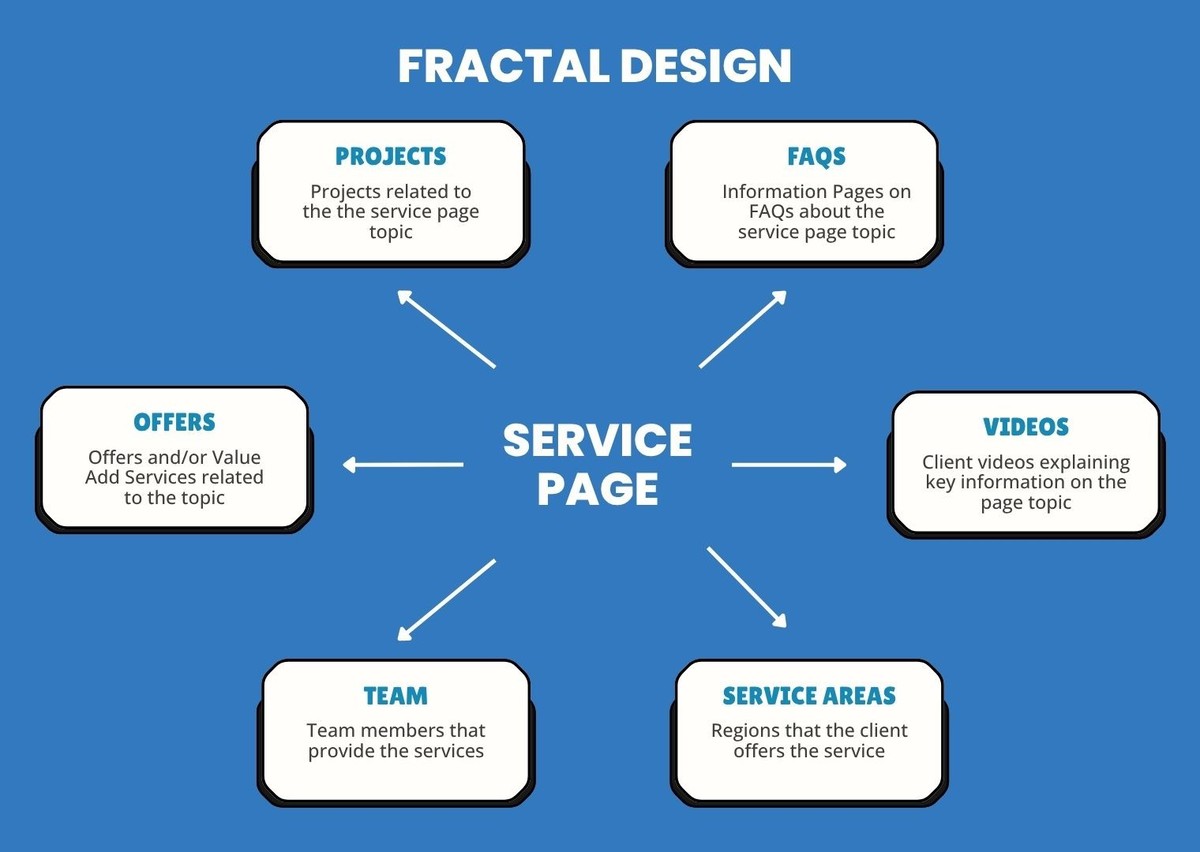
We decided to use the term Fractal Design to describe the structure of our websites, as like a snowflake or fern (Natural Fractal), our websites have repeating links across all pages in a section as well as a similar linking pattern in other sections. In other words, all service pages link to related projects, FAQs, offers, videos, team members and service areas with the same repeating pattern. Likewise, our project pages link to related service pages and team members etc; FAQs link to related service pages, team members, videos etc and so on. This structure helps AI and Search crawlers to better understand the website topics, whilst creating unique, non-commodity content showing experience, expertise, authority and trustworthiness (EEAT).
Website Design for SEO and GEO
When Search Engines (eg. Google, Bing etc) or AI Platforms (eg. ChatGPT, Gemini, Claude etc) crawl a website, they first try to understand what the website is all about (the topic) and then whether the content is worth referencing. To help them do this, Google recommends what they call "Topic Clusters" and it's been an important part of SEO for a long time and as such we have built our websites accordingly.
Topic Clusters is the same as Mind Mapping
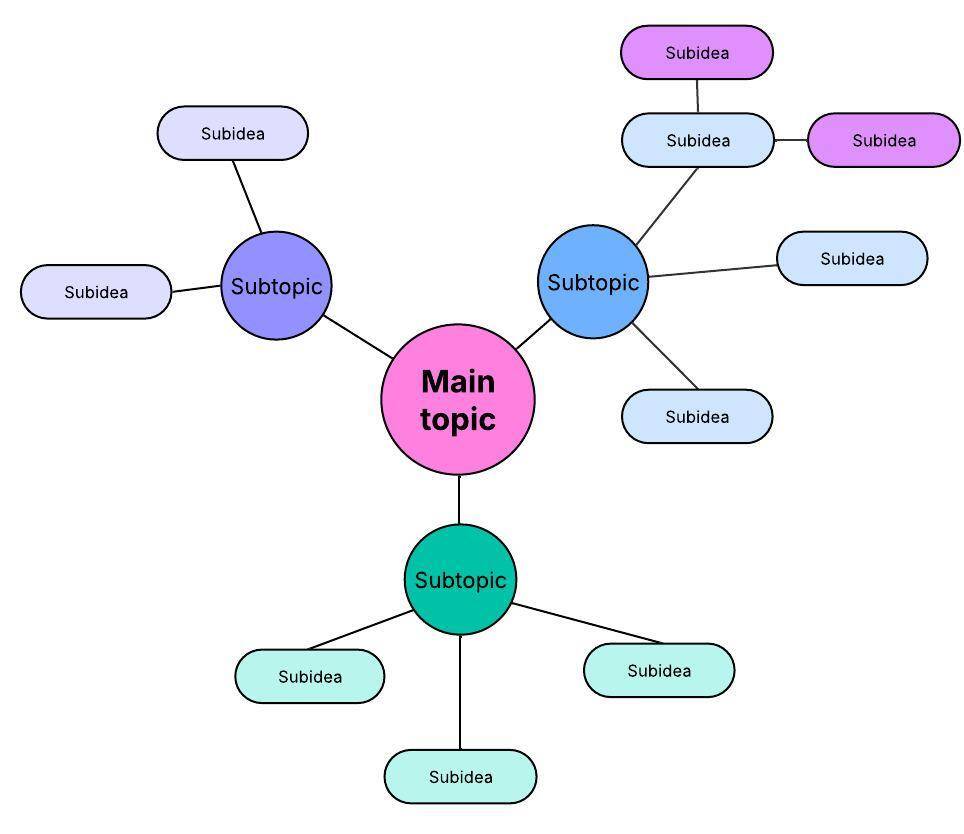
The best way to think of topic clusters is mind mapping. When you do a mind map you start with the main topic you are brainstorming and then link out to the subtopics that are related to the topic. You can then link out even further to subtopics of the subtopics. A topic cluster is exactly the same and is extremely important to help Google (and now Generative AI) to better understand the topics your website is about.
At Smartyr Marketing we have been doing this pretty much from the beginning. If we take an example of a Plumber website, we work out that the main topic of "Plumber" can be broken down into the following subtopics:
- General Plumbing
- Hot Water
- Drainage
- Gas Fitting
These subtopics we refer to as "Main Services" and "Pillars". Under each of these main services we work out the related subtopics or as we call them, "Sub-Services". If we take the plumber example and specifically look at the hot water main service, we get the following sub-services:
- Hot Water Repairs
- Hot Water Installation
- Gas Hot Water Systems
- Electric Hot Water Systems
- Rheem Hot Water
- Rinnai Hot Water
- ......... you get the idea
As a general rule, you want one topic per page so it is clear to the crawlers (Google & AI) exactly what you do. Further to this, each sub-service helps reinforce the main service authority by linking from it.
Before we talk about how Fractal Design expands on this, let's have a quick look at 2 other areas that have become important for Google and AI to index and cite your website.
What else helps you get found in Google and AI?
There are 2 key things that you need to consider when building a website and creating content optimised for SEO and GEO. These are:
- Non-Commodity Content
- EEAT
Non-Commodity Content
This is something that Google brought out at a presentation early in 2026. They stated that there was no point in them indexing thousands of pages that essentially say the same thing, when they can just index a few and reference that. This means that if you're not one of the few and your page isn't indexed, you never got onto the field to play the game. If you think AI is different, remember that most AI Agents are pulling their information from Google, so yet again you've lost the game before you even started. It is imperative that the pages and content on your website is unique and different than other pages on the same topic.
EEAT
EEAT stands for Experience, Expertise, Authority and Trustworthiness. This is how Google looks at content and websites, to help it decide whether it is good quality and worth indexing and ranking; not to mention where to rank it. How do you build this into a website design to support your content?
So where does Fractal Design fit into this?
As mentioned above, we have always built our websites around topic clusters. We have taken these clusters further, and for every sub-service page we linked out to related information pages and service areas. Whilst we didn't call this Fractal Design, each sub-service page had a similar linking pattern so was a form of natural fractal. This has worked extremely well and has been a big reason for the amazing results we have got our clients. But SEO is always changing.
At Smartyr Marketing, one of our core values is Kaizen or continuous improvement. We don't just stick to what we've always done but always looking for ways to improve. The way we structure our websites is very much proof of this.
After lots of research and brainstorming sessions, we came up with a new layout that not only supports EEAT, but helps to build unique, non-commodity content. To differentiate this layout from the layout we had been using up until now, we decided to call this Fractal Design.
So what exactly is Fractal Design?
Fractal design is a repeating link pattern across our website pages aimed at helping build Expertise, Experience, Authority, Trustworthiness (EEAT) and generate unique, non-commodity content. Let's look at the links we have across the different sections of our website:
Service and SubService pages:
- Information Pages
Link to related information pages to not only build authority around the topic, but also to answer the questions visitors may have and the "Fan-Out" questions AI platforms do when you ask about a topic. - Video Watch Pages
Link to related video watch pages where we get our clients to talk about key points on that service to build authority and trustworthiness. This is also unique content as no other website has our client talking about points to consider. - Projects
Link to projects showing the client delivering that service to show expertise and experience, as well as build trust. Once again, also unique content. - Offers
Link to offers on that service to help build authority and deliver unique content. More importantly, this helps improve conversions. - Team Members
Link to the team members that deliver the service to show expertise and trustworthiness. - Service Areas
Link to the areas you service to ensure Google and AI know and will recommend your services in those areas.
Information and video pages
- Team Member
Link to the business owner or team member who was in the video to build authority and show expertise and experience. - Related Information Pages
Project Pages
- Team Member
Link to the team member that completed the project. - Related projects
Team Member Pages
- Projects
Show all projects the team members was involved in to build authority, expertise and experience.
So there you have it, you now know what we mean when we refer to Fractal Design and why it is so important to getting your website found in Google and AI.